
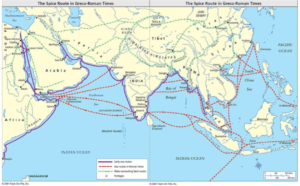
- Ancient and Medieval Maritime Routes: Somalia was a key hub on the Indian Ocean trade networks, linking to the Spice Route.
- Ports: Medieval Somali sultanates like the Ajuran and Adal had thriving ports such as Mogadishu, Merca, and Barawa.
- Exports: Goods traded included gold, ivory, textiles, and frankincense.
- Maritime navigation: Somali sailors mastered monsoon navigation, enabling long-distance voyages to and from places like India, China, and the Middle East.
- Berbera’s role: In the 19th century, the port of Berbera was recognized as the “freest port in the world” due to its bustling trade.
Modern and regional trade routes
- Maritime: Somalia’s coastline is situated along one of the world’s busiest sea lanes, making it a critical choke point between the Indian Ocean and the Suez Canal.
- Land and Regional Corridors:
- European Union-supported corridors: Efforts are underway to improve regional connectivity, specifically through developing the Dar es Salaam–Nairobi–Addis Ababa–Berbera/Djibouti corridor to enhance trade routes and infrastructure.
- Internal livestock routes: Key internal land routes exist for livestock, with major trekking routes for cattle moving from southern Somalia to markets in Kenya.
Reference: https://www.britannica.com/place/Somalia/The-great-Somali-migrations