Course Content
Unit One: – Somali History & Geography
Somali Ethnic Studies is an interdisciplinary field of learning that explores the history, culture, identity, language, migration, social systems, and lived experiences of the Somali people across the Horn of Africa and throughout the global Somali diaspora. Designed to center Somali voices, perspectives, and narratives, Somali Ethnic Studies helps students develop a deeper understanding of Somalia’s rich historical legacy, cultural traditions, and contributions to regional and global society. It also examines the historical and contemporary challenges that have shaped Somali communities, including colonization, state formation, civil conflict, migration, displacement, and resettlement.
0/23
Unit Two: – Introduction/How To Use This Curriculum
With this Somali Ethnic Studies curriculum, we aim to engage high school students – Somali-American and others – in what makes this Horn of Africa country so compelling. Whether it’s Somalia’s status as the first democratic republic in Africa; its geopolitical bridge between North and East Africa, Europe, the Middle East, and South Asia; precious minerals; rich fishing waters; its history of refuting colonization; or its predominantly oral culture, there is much to be learned from this country and its culturally diverse peoples. In general, the learning objectives for these units on history, geography, and culture are: Students will be able to describe at least three of the most significant developments in Somali history before and during colonization, and how they contribute to Somali-American experiences. Students will be able to describe the main features of the Somali landscape and how they affect Somali perspectives and practices. Students will be able to name at least four Somali products and perspectives that contribute to Somali-American identities. By the end of these two units on history, geography, and culture (which incorporate some exposure to Somali language as well) we expect that students will have gained an appreciation for the strengths and struggles of the Somali people, exploring the wisdom of an oral history captured in poetry, their abilities to settle and resettle in new lands, the roots of their entrepreneurialism, and their steadfast beliefs in family and faith that undergird the diaspora. With this background, we trust that students’ ability to compare and contrast the Somali experience with that of Somali-Americans, and identities of all sorts, will be better informed. These two units are an introduction to help better understand the current global issues: the aftermath of the Somali civil war, climate change, resettlement of a diaspora, predatory practices of neighboring countries’ terrorist organizations, and recovery from famine, as well as cultural strengths such as family, faith, and entrepreneurialism. We see the emergence of the concept of a “Greater Somalia” that reaches beyond its current borders. We plan to further develop this curriculum to include units on identity and political conflict (i.e., more recent Somali history) and are so grateful for your interest in these foundational chapters. How Tos Please consider this your invitation to adapt the curriculum. Make it your own! We have tried to provide enough context (in the form of “Backgrounders” for each lesson) so that even an educator who is not of Somali heritage feels comfortable with the material. Each lesson has a corresponding slide deck and related assessment materials. Group work is an opportunity for social and emotional learning, reflected the attendant student/teacher assessment. Guidance is also offered for differentiation of instruction and assessment. While we have offered estimated times for each activity, these are simply guidelines. Any lesson could be expanded or contracted. Even if your focus is not Somali Ethnic Studies, we hope that (for example) the writers’ workshop approach to capturing community leaders’ stories may prove relevant. While we strive to offer African-authored materials wherever possible, we also hope those resources – whether print or electronic – will only increase in the future. Unit One The first unit addresses geographical and historical aspects of Somalia and its people. We explore how climate and various push-and-pull factors influence Somali history and aided the Somalis in resisting colonization. The goal is to provide students with a comprehensive understanding of what Somalia looked like before colonization, during colonial times, and up to independence, so that future units on political conflict and identity are rooted in some basic understandings. Key themes included the concept of Greater Somalia (“Somali Wayn”) and the enduring issues created by colonial divisions, as well as the role of the Dervish movement and its leader, Sayyid Mohamed Abdulle Hassan, in challenging imperialism. We also examine the contributions of the Somali Youth League in leading Somalia toward independence. Unit Two In the second unit, we focus on Somali culture to help students understand daily interactions within the community, covering topics such as the role of traditional leaders (“hogaanka dhaqanka”) and the roles of women in governance, gender dynamics, marriage customs, values such as honor and generosity, and the significance of various types of Somali poetry and dance. Please note that this curriculum is a work in progress, and several themes and historical aspects are yet to be addressed. A forthcoming unit will focus on Somali identity, examining both the Somali community in Somalia and the diaspora. Another will delve into political conflict, addressing the Somali civil war and its underlying causes, including the effects of the Cold War on Somalia, the colonial legacy, piracy from a Somali perspective, media framing, and the emergence of Islamist ideologies and groups. We also will explore the contributions of the Somali diaspora, particularly in Minnesota and in Somalia, and are considering lessons on the clan system and its significance, the role of the Sufi sect in Somali history, and trade across the Indian Ocean. Thank you for delving in! We hope you discover helpful resources and that you will help us shape units to come. Table of Contents Unit 1: History and Geography Exploring the Geographic and Climatic Landscape of Somalia: Influences on Culture and Economy The Strategic Location of Somalia Origins of the Somali People The Early Dynasties of Somalia Imperialism The Dervish Resistance: Sayid Mohamed Abdulle Hassan and His Resistance Against Colonialism The Colonization of Somalia and Its Impact Somalia's Journey to Independence Elders' Storytelling Sessions Unit 2: Culture What is Culture? Exploring Somali Culture Marriage in Somali Culture Generosity and Honor Introduction to Somali Family and Kinship The Role of Elders Basic Etiquette in Somali Culture Somali Traditional Dances Somali Poetry
0/10
Somali Ethnic Studies

Somalia’s location and geography have significantly influenced its economic and cultural development over time. Historically, Somalia has served as a strategic hub for early kingdoms, facilitating trade and cultural exchange. Today, its geopolitical significance remains crucial for world powers, influencing international relations and economic interests in the region.
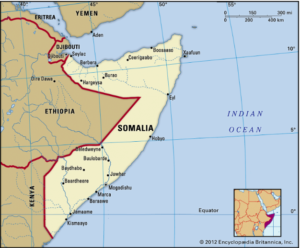
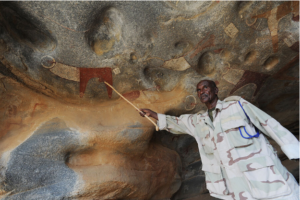
The history of Somalia dates back to the Paleolithic Age, with evidence of cave paintings that can be traced to around 9000 BCE. Its geographical position, bordered by Djibouti to the northwest, Kenya to the south, the Gulf of Aden to the north, the Indian Ocean to the east, and Ethiopia to the west, has contributed to its importance throughout history. 
In ancient times, Somalia established trade relations with various countries, including Egypt and India. The trade of cinnamon, in particular, was highly prized in Europe, especially during the eras of ancient Rome and Greece. Much of the cinnamon that reached Europe originated in India and was transported through the Gulf of Aden. The strategic significance of the Gulf of Aden grew considerably following the opening of the Suez Canal, enhancing Somalia’s role in global trade routes.
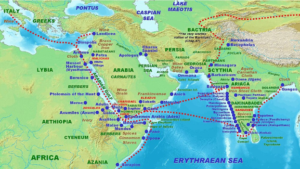
Somalia has also maintained close relations with neighboring countries such as Egypt, Nubia (a historical region that is now divided between southern Egypt and northern Sudan) and Ethiopia. These interactions have led to cultural similarities among these nations, reflecting shared histories and influences.

In recent years, the United States has renewed its interest in Somalia, particularly in the context of security and counterterrorism efforts. On April 15, 2017, U.S. Africa Command confirmed the deployment of several dozen troops from the 101st Airborne Division to train and equip Somali forces in their fight against the militant Islamist group al-Shabab. This move was part of a broader strategy to enhance local military capabilities.
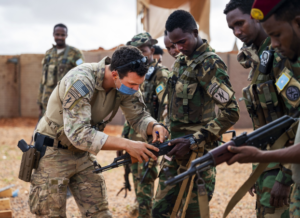
The U.S. interest in the Horn of Africa, particularly Somalia, can be attributed to its geographic significance. Somalia’s northern coast borders the Gulf of Aden, leading to the Bab-El Mandeb Strait. This strait is crucial for global shipping routes, as any disruption would force goods, including oil from the Persian Gulf, to navigate around the entire continent of Africa to reach European and American markets.

The Arabian Peninsula, which holds a significant portion of the world’s oil reserves, is a volatile region that major powers are keen to control. The Bab-El Mandeb Strait is particularly valuable for naval forces seeking to project power into the Arabian Peninsula. Given Somalia’s geostrategic location, the United States participated in the humanitarian mission Operation Restore Hope in 1991, underscoring the ongoing relevance of Somalia in global geopolitical dynamics.


References: 

Scroll to Top